


Loan for Bad Credit in Canada: Options & What to Know
Bad credit closes some doors in Canada. It does not close all of them. Many lenders still work with borrowers who carry low scores. This guide explains how to get a loan on bad credit the honest way. You will learn what lenders check before they decide, You will see what these loans really cost in dollars, You will also learn how a loan for bad credit gets approved or declined. The goal here is clarity, not hype. No lender guarantees approval to everyone, and this guide will not pretend otherwise.
What a Loan for Bad Credit Means to a Canadian Lender?
Two bureaus hold your credit file: Equifax and TransUnion. Your file produces a score between 300 and 900. A lower score signals more risk to a lender. Missed payments, high balances, and collections all pull it down. A thin file with little history can score low too.
Here is the part most borrowers miss. Many short-term lenders do not run a hard bureau check at all. They verify your income instead. They review your recent banking activity. That is why a loan for bad credit stays possible even with a weak score. Your bank statements often matter more than your three-digit number.
Can You Actually Get a Loan for Bad Credit?
Yes, in most cases you can apply and be assessed. Lenders that focus on bad credit weigh income heavily. They look at whether you can repay from your next pay. A low score alone rarely blocks you. Affordability matters far more to these lenders than history.
Availability is not the same as a good deal, though. Loans aimed at poor credit usually cost more. The lender prices in the extra risk. So treat access and affordability as two separate questions. Borrow because the numbers work, not just because approval feels close.
The Truth About “Guaranteed Approval” and “No Refusal”
Canadians search for phrases that promise a sure thing. Common examples include bad credit personal loans guaranteed approval direct lenders Canada and no refusal installment loans canada instant approval. These phrases set a false expectation. No legal Canadian lender approves every applicant automatically. Every lender still assesses income, banking activity, and repayment ability.
You will also see high risk loans guaranteed approval Canada and guaranteed approval loans for poor credit canada instant. Read these as marketing, not as fact. A lender can decline you even with bad credit accepted in principle. Terms like “instant approval” and “same day” describe a possible speed. They never describe a promise that applies to everyone.
How Bolt Payday Fits Into the Process
Bolt Payday is not a bank. Bolt Payday is not the direct lender either. It operates as a service that connects Canadian borrowers with participating lenders. Your application details go to one or more of those lenders. A lender then decides whether to make an offer.
This distinction changes what you should expect. Bolt Payday does not set your final rate. It does not approve or fund your loan. It does not control the lender’s terms after you sign. Only the participating lender confirms your rate, fees, and repayment schedule. You can review how participating lenders use your information before you apply. You are under no obligation to accept any offer you receive.
Start by Defining Your Borrowing Need
Strong borrowing decisions start with one honest question. Why do you actually need this money? The answer shapes every choice that follows. It decides your loan type, your amount, and your term. Skip this step and you often borrow wrong.
Most short-term borrowing falls into a few clear buckets:
- An emergency cost, like a car repair or a medical bill.
- A bill that lands before your next pay cheque.
- A short cash-flow gap that clears in a week or two.
- Consolidating several small debts into one payment.
- A larger planned purchase you cannot cover in full today.
Each need points to a different product. A short gap suits a small payday loan. A larger, longer cost suits a personal or installment loan. Matching the two is the core skill here. Getting it wrong is where most borrower pain begins.
Choosing the Right Loan Type
Three factors decide the right loan type for you. They are cost of borrowing, speed of approval, and repayment flexibility. You rarely get the best of all three at once. A fast loan often costs more. A cheaper loan often moves slower. Understand the trade-off before you choose.
Payday Loans
A payday loan is small, fast, and short. You borrow a lump sum and repay it on your next pay date. Regulated amounts in Canada run from $100 to $1,500. Approval is quick because lenders check income, not your bureau file. You can review current payday loans in Canada terms directly on the lender-facing pages. The catch is cost, which stays high for the short term involved.
Personal Loans
A personal loan usually covers a larger amount over a longer term. You repay it in fixed instalments across months. Rates vary widely by lender and by your profile. A personal loan often costs less per dollar than a payday loan. It also takes longer to arrange and may involve more checks. Borrowers with steadier income can compare personal loans for bad credit against short-term options.
Short-Term and Same-Day Borrowing
Some borrowers need cash the same day they apply. Certain lenders fund quickly once they verify your income. You can explore same-day payday loans with no credit check where speed is the priority. Read “no credit check” honestly, though. It usually means no hard bureau pull. It does not mean the lender skips every check. They still confirm income and scan your bank activity.
People also search for installment loans for bad credit Canada and installment loans Canada. Instalment borrowing spreads repayment over several scheduled payments. That structure can ease pressure compared with one large payday repayment. Bolt Payday facilitates payday and personal loans specifically. Treat installment products here as an educational comparison, not a listed offer.
What a Bad Credit Loan Really Costs in Canada
Cost is where honest guidance matters most. A low headline fee can hide a very high annual rate. Learn to read both numbers before you agree to anything.
The $14 Per $100 Rule and the Real APR
In most regulated provinces, a payday loan costs $14 per $100 borrowed. Picture a $300 loan repaid in about two weeks. The fee is $42. You repay $342 in total. That single fee looks small on its own. Annualized, that same rate equals roughly 365 percent APR. State that number to yourself before you borrow. The short term is exactly why the APR climbs so high.
Fees Beyond the Headline Rate
The flat fee is not always the whole story. Miss a payment and costs grow fast. A dishonored payment triggers an NSF fee. In most provinces, the lender’s NSF fee is capped at $20. Your own bank usually charges its own NSF fee on top. Interest may then accrue on the unpaid balance. Small slips can turn a modest loan into a heavy one.
The 2026 Rules That Protect You
Canadian rules give borrowers real protections. Use them. Regulated payday loans are generally capped at $1,500 or less. Repayment terms commonly run up to 62 days. As of January 2025, the federal criminal interest rate sits at 35 percent APR. Payday loans follow a specific provincial exemption, which lets them charge more per short term.
More protections apply in most provinces:
- Rollovers are restricted or banned. In Ontario, you cannot take a new payday loan until you repay the current one.
- A cooling-off period, often around two business days, lets you cancel without penalty.
- Lenders must disclose the full cost in both dollars and APR before you sign.
Quebec is the clear exception. Its rules cap rates near 35 percent, so conventional payday loans Quebec borrowers might expect are effectively rare there. Elsewhere, the same $14 per $100 cap applies whether you borrow in Brampton, Calgary, Hamilton, or Winnipeg. Searches for payday loans Brampton land on the same Ontario rules that cover the whole province.
Picking the Right Amount and Term
The maximum offered is not your target. Your actual need is your target. Borrow the smallest amount that solves the problem. A larger loan means a larger fee and a larger repayment. Every extra dollar borrowed is a dollar you must repay with cost attached.
Think in tiers. Small entry-level borrowing runs from about $100 to $500. Mid-range borrowing runs up to roughly $2,000. Advertised amounts at Bolt Payday reach up to around $2,000. Regulated payday loans specifically stay within $100 to $1,500. Match the tier to your need and your repayment ability, not to the ceiling.
Now match the amount to your income. Ask a simple question first. Can your next pay cover this repayment and your normal bills? If the answer is no, the loan is too big. A repayment that swallows your pay creates the next shortfall. That is how a single loan becomes a repeating cycle.
How Lenders Assess a Bad Credit Application
A lender is really answering one question. Can this person repay us on time? Your score informs that answer but does not decide it alone. Bad-credit lenders lean on income and banking behaviour. They want to see money coming in steadily. They want to see an account that is not constantly overdrawn.
Baseline eligibility with Bolt Payday is straightforward. You must be at least 18 years old, You must be a resident of Canada, You must earn at least $1,000 per month, You must hold a valid Canadian bank account. Meeting these lets you apply and be assessed. It does not guarantee that any lender makes an offer.
Do Lenders Accept Social Assistance or Government Benefits?
Some borrowers rely on benefits rather than a traditional job. People search for instant payday loans that accept social assistance canada online and payday loans with government benefits Canada. The honest answer is that policies vary by lender. Some lenders count stable benefit income as qualifying income. Others require employment income only. No rule forces a lender to accept benefit income.
Add a strong caution here. High-cost loans hit fixed or limited incomes hardest. A large repayment can leave you short next month. If your income barely covers essentials, borrowing at 365 percent APR is risky. Explore lower-cost options and support programs first. Borrow only when the repayment clearly fits your budget.
Before You Sign: Your Pre-Approval Checklist
Never sign an offer you have not fully read. A good lender shows every number before you commit. Confirm each item on this list first:
- The APR, stated as a clear annual percentage rate.
- Every fee, including administration and potential late or NSF fees.
- The total cost of borrowing in real dollars, not just the rate.
- The full repayment schedule, with each date and amount.
- The cooling-off period and exactly how to cancel.
- Who to contact if a payment date becomes a problem.
If a lender cannot answer these plainly, treat that as a warning. You can also check general payday loan fees and repayment terms before you apply anywhere. Reading first protects you far better than reacting later.
What Happens If You Miss a Payment
Missing a payment carries real consequences. The lender may charge the capped NSF fee. Your bank adds its own NSF charge. Interest can accrue on the amount you still owe. The balance you owe can keep growing from there.
Longer term, an unpaid loan can reach a collection agency. That collection can then appear on your credit report. A payday loan rarely builds your credit when repaid on time. Most payday lenders do not report positive history to the bureaus. A default, however, can still damage your file through collections. Protecting your repayment date protects your future borrowing.
One Loan Versus Consolidating Several Debts
Some borrowers juggle several small debts at once. Each carries its own payment and its own due date. Missing any one of them adds fees. Consolidation folds those balances into a single payment. A lower-rate installment loan can do this. A credit-union consolidation loan can too.
Compare the two paths honestly. A single new short-term loan solves an immediate gap. It does not fix an ongoing pattern of multiple debts. Consolidation aims at the pattern itself. It works best when the new rate beats your current mix of rates. It fails when you consolidate and then keep borrowing.
Borrower Types and How They Decide
First-Time Borrowers
First-time borrowers should start small and cautious. Borrow only what a single pay cheque can comfortably repay. Read every number before you sign anything. Use the cooling-off period if the offer feels wrong. A careful first loan teaches you the process safely.
Repeat Borrowers
Repeat borrowers face a specific trap. Convenience can quietly turn into dependence. Track how often you borrow to bridge the same gap. Frequent repeat borrowing usually signals a budget problem, not a cash problem. If that pattern appears, pause and address the root cause. Rollovers are restricted for exactly this reason.
Borrowers With Poor or No Credit History
Poor or thin credit is common, and lenders expect it here. Strengthen the parts of your application you control. Show steady income across your recent statements. Keep your bank account in reasonable standing. Apply to a matching service rather than many lenders at once. That approach limits repeated checks while still reaching several lenders. It suits urgent loans for bad credit Canada instant approval searches in a practical way. It carries no false promise of a guarantee.
Cheaper Alternatives Worth Checking First
A payday loan should sit near the bottom of your list. Cheaper options exist for many borrowers. Check these before you commit to high-cost credit:
- A line of credit or overdraft, if your bank offers one.
- A credit union, which often serves bad-credit members fairly.
- A payment plan arranged directly with a biller you owe.
- Earned-wage access through some employers, at a far lower cost.
- A non-profit credit counsellor, who can help you build a plan for free.
You can browse more short-term borrowing guides on the blog as well. A short pause to compare can save you real money.
How to Apply Once You Have Decided
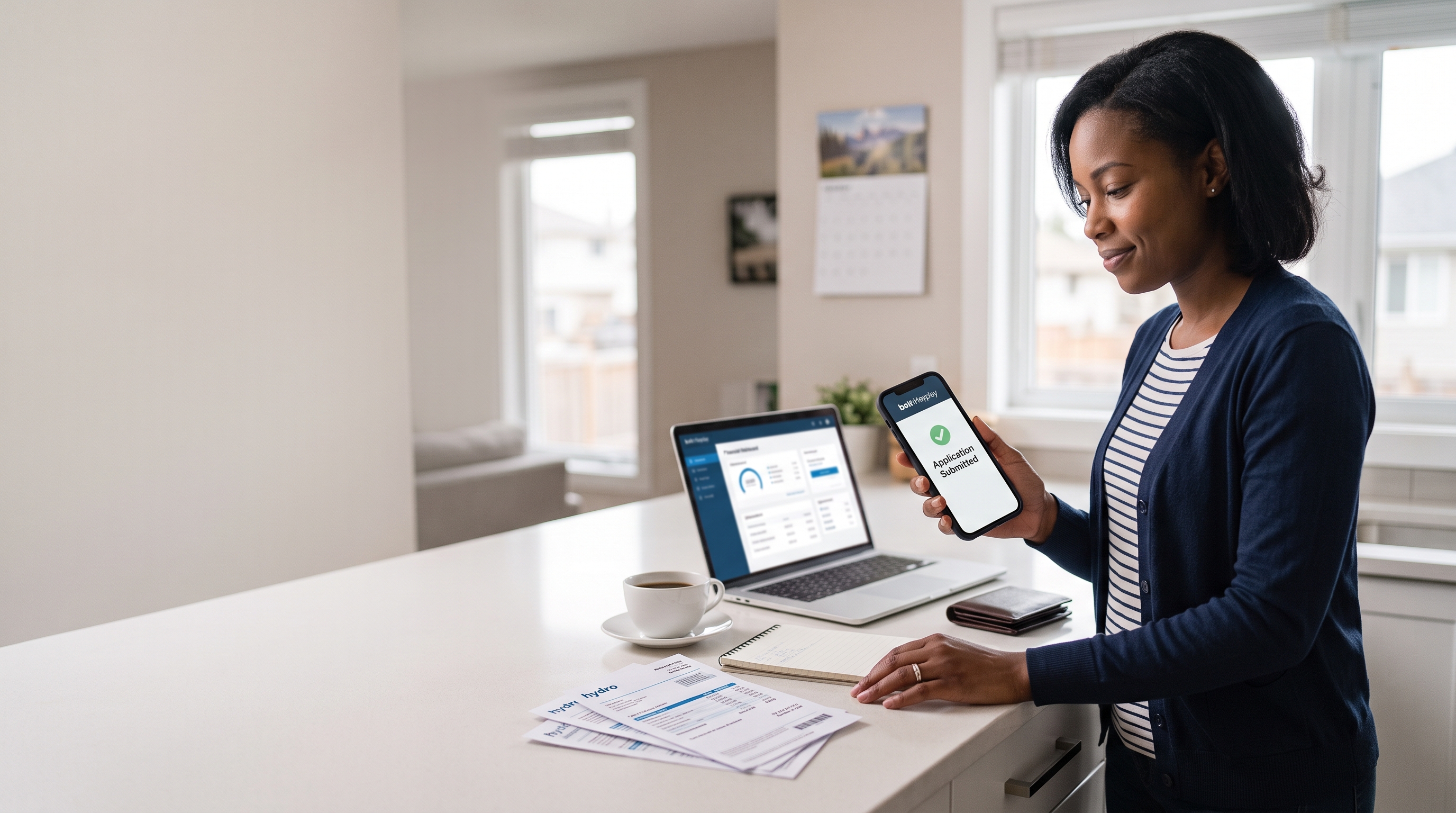
Applying is simple once your decision is sound. Confirm your need, your amount, and your term first. Check that the repayment fits your next pay cheque. Then complete the form with accurate details. Honest income figures lead to realistic offers. You can apply for a payday loan online and let participating lenders review your request. Remember that you can still decline any offer you dislike.
Frequently Asked Questions
Can I really get a loan with bad credit in Canada?
Yes, many Canadians with loan for bad credit still qualify to apply and be assessed. Bad-credit lenders focus on your income and your recent banking activity. A low score alone rarely blocks you outright. What matters most is whether you can repay your next pay. No lender guarantees approval, though, so treat access as possible rather than certain. Borrow only when the repayment clearly fits your budget.
Do bad credit lenders really skip the credit check?
Most payday lenders do not run a traditional hard bureau check. That is what “no credit check” usually means in practice. It does not mean they skip every check entirely. They still verify your income and review your bank statements. They assess whether your cash flow can handle the repayment. So read “no credit score” honestly, because a real assessment still happens.
How much does a bad credit payday loan cost in Canada?
In most regulated provinces, a payday loan costs $14 per $100 borrowed. A $300 loan repaid in two weeks costs $42 in fees, so you repay $342. That short-term fee equals roughly 365 percent APR when annualized. Regulated amounts generally run from $100 to $1,500. Missed payments add costs, including an NSF fee capped at $20 in most provinces. Always confirm the full dollar cost before you sign.
Can I get a payday loan on social assistance or government benefits?
Sometimes, because policies vary from one lender to another. Some lenders count stable benefit income as qualifying income. Others require employment income and will decline benefit-only applications. No rule forces any lender to accept government benefits. Be extra careful if you rely on a fixed or limited income. A 365 percent APR repayment can leave you short the following month. Explore lower-cost options and support programs before you borrow.
Are “guaranteed approval” bad credit loans real?
No, guaranteed approval for everyone does not exist in legal Canadian lending. Phrases like guaranteed approval or no refusal are marketing language. Every lender still assesses income, banking activity, and repayment ability. A lender can decline you even when it accepts bad credit in principle. Words like instant and same day describe a possible speed, not a promise. Judge any offer by its real terms, not its slogan.
What happens if I cannot repay my loan on time?
A missed payment usually triggers an NSF fee from the lender, capped at $20 in most provinces. Your own bank often adds its own NSF charge on top. Interest can accrue on the unpaid balance, so the total owed grows. Left unpaid, the debt can move to a collection agency. That collection can then appear on your credit report and hurt your score. Contact your lender early if you expect trouble, because options shrink after you default.
Is a payday loan or a personal loan better for bad credit?
It depends on your need, your amount, and your repayment ability. A payday loan suits a small, short gap you can clear on your next pay. A personal loan suits a larger cost repaid over several months in installments. Personal loans usually cost less per dollar but take longer to arrange. Payday loans move faster but carry a much higher effective rate. Match the product to the reason you are borrowing, not to whichever approves fastest.